
Territorial Aggression: Why Your Dog Acts Different at Home
“Honestly, he’s lovely once people are inside.”
This is something I hear all the time from owners of territorial dogs.
Their dog may bark furiously at the gate, fence, window, or front door — yet happily accept attention once the visitor enters.

Territorial aggression is surprisingly common and doesn’t automatically mean you have an “aggressive dog.”
Why Dogs Become Territorial
Dogs naturally pay attention to their environment. For some dogs, especially those who are anxious, highly alert, or naturally watchful, the home can begin to feel like something they must guard.
Territorial aggression may be linked to:
Fear or insecurity
Learned behaviour
Frustration
Overconfidence
Breed tendencies (Landsberg et al., 2012)
And sometimes the behaviour accidentally gets reinforced because barking works — the person walks away, the delivery driver leaves, or the stranger passes by.
To the dog, it feels successful.
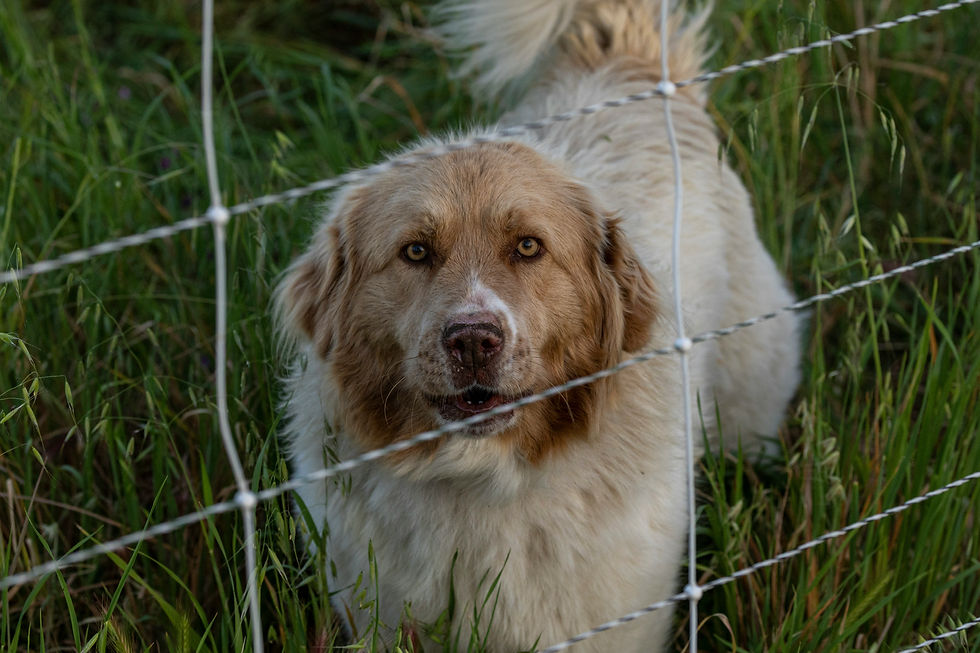
In fact most dogs were used to alert humans to strangers on their lands and property for thousands of years. Also some breeds still to this day are bred for this behaviour, such as livestock guardian breeds. this behaviour is so inherently ingrained in dogs genetics it is understandable why does are so instinctively reactive and bark.
The Important Thing to Remember
Your dog is not trying to make your life difficult.
Most territorial dogs are highly emotionally aroused rather than intentionally “naughty.”
Many are actually stressed, overwhelmed, or uncertain.
What Helps?
The goal is not to suppress barking completely. The goal is helping your dog feel calmer and safer.
That may involve:
Reducing rehearsal of window barking
Teaching relaxation skills
Rewarding calm behaviour around visitors
Providing enrichment and decompression
Changing emotional responses gradually
Dogs who are mentally fulfilled and emotionally balanced are often far less hyper-vigilant (Landsberg et al., 2023).
Don’t Worry About Being “Too Soft”
Many owners fear that using reward-based methods means “letting the dog get away with it.”
But behaviour change rooted in emotional safety is not permissive — it’s effective.
Punishment may temporarily suppress behaviour, but it rarely changes the emotion driving it.
A dog who feels safe has far less reason to guard.
Progress Takes Time — And That’s Okay
Territorial behaviour often develops gradually, so improvement also happens gradually.
Celebrate the small wins:
One calmer response
One successful visitor
One quieter moment at the window
Those moments matter more than you think.



Comments