
Is your Pooch getting the Appropriate Exercise? Do these behaviours sound familiar?
Exercise is one of the most fundamental needs in a dog’s life, yet it is also one of the most commonly misunderstood. While it is often framed simply as “a walk each day,” appropriate exercise is far more nuanced. It plays a central role in emotional regulation, behavioural stability, physical health, and cognitive wellbeing.

When exercise needs are not met—or are not met appropriately—dogs do not simply become “full of energy.” Instead, they may begin to show signs of frustration, boredom, and emotional dysregulation, which can present as destructive behaviour, excessive barking, hyperactivity, or difficulty settling.
Understanding what appropriate exercise looks like for an individual dog is therefore essential for preventing behaviour problems and supporting long-term welfare.
Exercise as a Core Welfare Requirement

Exercise is not optional for dogs; it is a biological and behavioural necessity. Research consistently highlights that lack of adequate physical outlet is associated with increased behavioural concerns and reduced welfare outcomes. In environments where dogs are confined or restricted in movement, problem behaviours are significantly more likely to emerge (Mornemet, 2018).
In more extreme cases, dogs raised or kept with minimal opportunity for movement or play may develop serious physical and emotional consequences. Dogs from environments such as puppy farms, for example, may have had limited early opportunities for exercise and play, which can affect both their behavioural development and long-term resilience (Overall, 2017).
For this reason, access to appropriate indoor and outdoor spaces for movement is a key welfare consideration (Mornemet, 2018). Exercise is not simply about distance or duration—it is about freedom of expression, exploration, and appropriate physical engagement.

Do these behaviours sound familiar?
When Exercise Needs Are Not Met
Dogs who do not receive sufficient or appropriate outlets for energy often redirect that motivation into other behaviours. This can present as barking, chewing, restlessness, or overactivity within the home environment.
In more severe cases, particularly where dogs experience prolonged confinement or minimal environmental stimulation, behavioural concerns can become more entrenched. Research has highlighted that restricted movement and limited enrichment opportunities are associated with significant welfare compromise and behavioural deterioration (Mornement, 2018). Dogs who experience limited early-life exposure to exercise and play may also show long-term emotional and behavioural consequences (Overall, 2017).
From a welfare perspective, this highlights the importance of providing dogs with adequate access to both indoor and outdoor environments that support movement, exploration, and species-appropriate activity.
Every Dog Needs Exercise — But Not the Same Type or Amount
There is no universal exercise requirement for all dogs. Exercise needs vary significantly depending on breed, age, health status, personality, and life experience.
Guidance from organisations such as the PDSA reinforces that every dog has individual requirements and that appropriate exercise contributes to both physical and emotional wellbeing. Dogs who receive suitable levels of exercise are less likely to develop obesity-related health concerns and are more likely to maintain long-term physical condition and mobility (Degeling et al., 2012).
Exercise also plays a role beyond physical health. Regular movement has been associated with improved cognitive function and may help to slow age-related cognitive decline in senior dogs (Prpar Mihevc & Majdič, 2019). In addition, appropriate exercise has been linked to improved emotional regulation and a reduction in behavioural issues such as aggression or frustration-based responses (Denenberg et al., 2017).

Life Stage Considerations
A dog’s exercise needs change throughout their lifespan.
Puppies require carefully managed activity to support healthy musculoskeletal development. Overexertion during growth phases, particularly in large or heavy breeds, can increase the risk of long-term joint issues. Structured, low-impact activity is therefore recommended, with short, regular sessions rather than prolonged periods of physical exertion.
As a general guideline, veterinary recommendations often suggest a gradual increase in exercise duration based on age and development. However, these should always be adjusted according to the individual puppy, breed type, and observed tolerance.
Older or unwell dogs may require reduced exercise and increased rest, as recovery and comfort become a priority. In these cases, maintaining gentle mobility is often more appropriate than sustained physical exertion.
The Role of Breed and Genetics in Exercise Needs
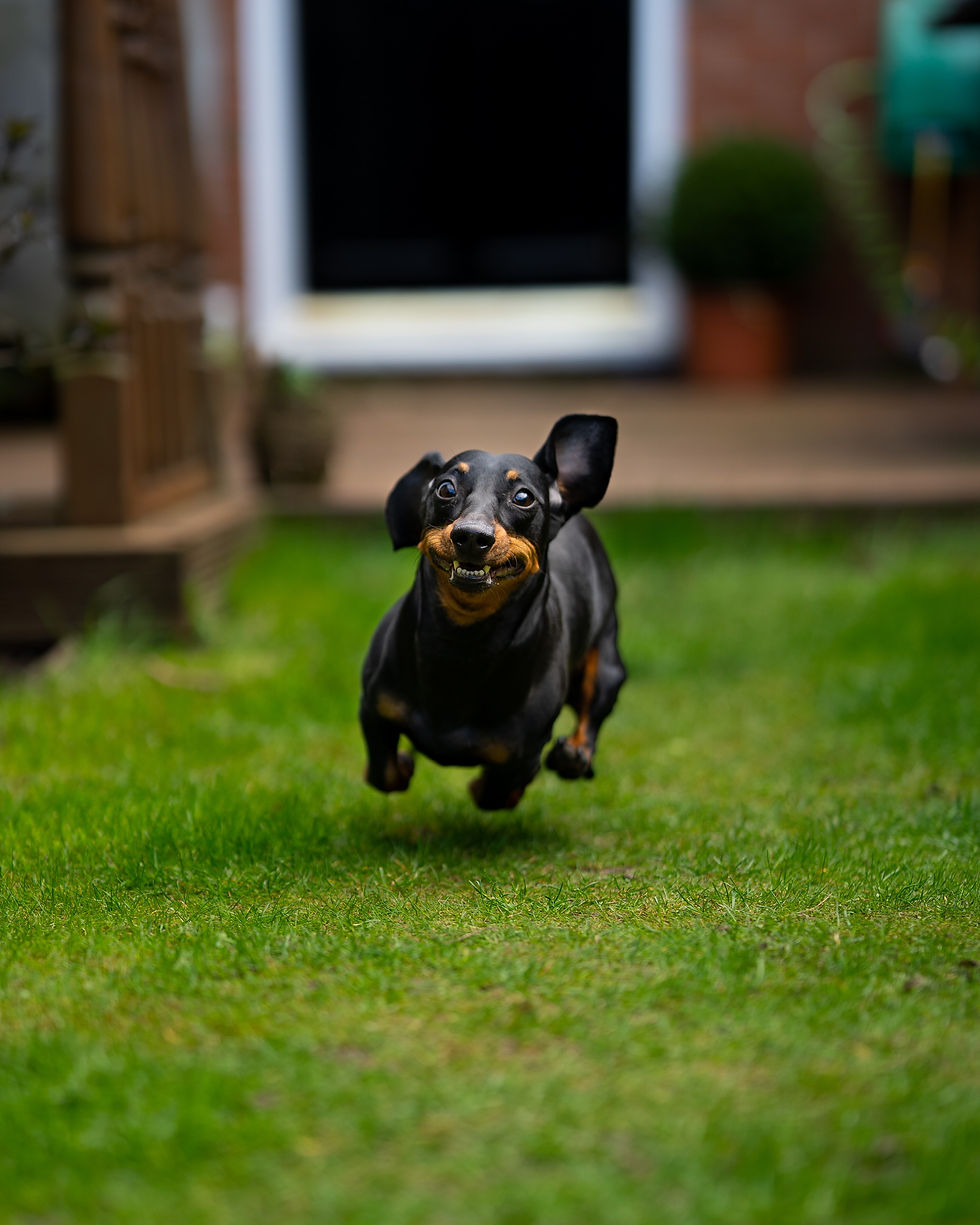
Breed and physical structure also play a significant role in exercise suitability. When dogs are selected primarily for appearance without consideration of behavioural or physical needs, there is an increased risk of behavioural frustration and unmet welfare requirements (Zawistowski & Reid, 2016).
In some breeds, exaggerated physical features may limit the ability to engage in natural behaviours such as sustained running or efficient breathing. Brachycephalic breeds and dogs with shortened limbs, for example, may experience difficulty regulating temperature and respiratory function during exercise. This has a direct impact on both quality of life and the type of exercise that is safe and appropriate (Rooney & Bradshaw, 2014).
For these dogs, exercise must be carefully adapted. Short, frequent walks with rest breaks are often more appropriate than prolonged activity, allowing them to engage safely without unnecessary physiological strain.
Physical Structure and Exercise Limitations
It is also important to recognise that physical structure influences how a dog can safely exercise. Dogs with exaggerated conformations, including brachycephalic breeds or those with shortened limbs, may have inherent limitations in airflow, endurance, or joint function.
These physical constraints can restrict natural behaviours such as running or sustained exertion and may impact overall quality of life (Rooney & Bradshaw, 2014). However, this does not remove the need for exercise—it simply changes how it must be delivered.
For these dogs, shorter, more frequent walks with rest breaks are often more appropriate than prolonged activity. The focus should be on comfort, breathing capacity, and positive experience rather than intensity or distance.
Exercise as a Behavioural Intervention: Practitioner Perspectives
From a canine behaviour practitioner perspective, exercise is not only a welfare requirement but also a core behavioural intervention tool.
Effective support begins with a detailed assessment of the dog’s:
Age and physical health
Behavioural presentation
Energy level and recovery ability
Breed tendencies and preferences
Home environment and lifestyle routine
From this, tailored recommendations can be made to ensure exercise is both appropriate and achievable for the individual dog.

This may include:
Swimming as a low-impact, joint-friendly exercise option
Structured dog sports such as agility or Hoopers for mentally and physically engaged dogs
Gradual introduction to structured running or cycling for high-energy breeds
Sniff-based walking to support sensory enrichment and emotional regulation
Short, calm exploratory walks for anxious or overstimulated dogs

Importantly, exercise should not exist in isolation. When combined with training and relationship-building, it becomes a powerful tool for behavioural improvement.
Integrating Training, Play, and Movement
Exercise is most effective when it is embedded within a broader framework of engagement and communication.
Training-based exercise can include:
Recall games that encourage responsiveness and focus
Loose lead walking and engagement exercises
Fetch and retrieve games with clear structure (e.g., “drop” cues)
Scent work and search-based activities for cognitive enrichment
Play and exercise should also include rest breaks, particularly in warmer weather or high-arousal environments. Overstimulation can reduce learning ability and increase stress responses, so structured pauses are an important part of any activity plan.
Social Exercise and Controlled Interaction
Where appropriate, social exercise can be highly beneficial, but it must be carefully managed. Not all dogs are suitable play partners, and compatibility should always be assessed rather than assumed.
Structured approaches such as parallel walking before off-lead interaction can support calm introductions and reduce social pressure. In all cases, safety and control remain essential. Dogs should either have reliable recall or remain on a lead or long line in public spaces.

The aim is not simply to allow interaction, but to ensure that interaction is positive, safe, and appropriately regulated.
Conclusion: Exercise as a Foundation for Behaviour and Wellbeing
Appropriate exercise is far more than physical activity. It is a key component of emotional regulation, behavioural stability, and overall welfare.
When a dog’s exercise needs are met appropriately—taking into account age, breed, health, and individual temperament—there is a noticeable improvement not only in physical condition but also in behaviour, confidence, and ability to settle.
For owners, understanding this relationship is essential. Many behavioural concerns that appear complex are, in fact, strongly influenced by unmet or mismatched exercise needs.
Supporting a dog through appropriate movement is therefore one of the most effective and meaningful ways to improve both quality of life and the human–dog relationship.
References
Degeling, C., Burton, L. and McCormack, G.R., 2012. An investigation of the association between socio-demographic factors, dog-exercise requirements, and the amount of walking dogs receive. Canadian Journal of Veterinary Research, 76(3), pp.235-240.
Denenberg, S., Liebel, F.X. and Rose, J., 2017. Behavioural and medical differentials of cognitive decline and dementia in dogs and cats. Canine and Feline Dementia: Molecular Basis, Diagnostics and Therapy, pp.13-58.
Mornement, K., 2018. Animals as companions. In Animals and human society (pp. 281-304). Academic Press.
Overall, C. ed., 2017. Pets and people: The ethics of our relationships with companion animals. Oxford University Press.
Prpar Mihevc, S. and Majdič, G., 2019. Canine cognitive dysfunction and Alzheimer’s disease–two facets of the same disease?. Frontiers in neuroscience, p.604.
Rooney, N. and Bradshaw, J., 2014. Canine welfare science: An antidote to sentiment and myth. In Domestic dog cognition and behavior: The scientific study of Canis familiaris (pp. 241-274). Berlin, Heidelberg: Springer Berlin Heidelberg
Zawistowski, S. and Reid, P., 2016. Dogs in today’s society: the role of applied animal behavior. Domest Dog, pp.227-44.


Comments